







Candelaria Website
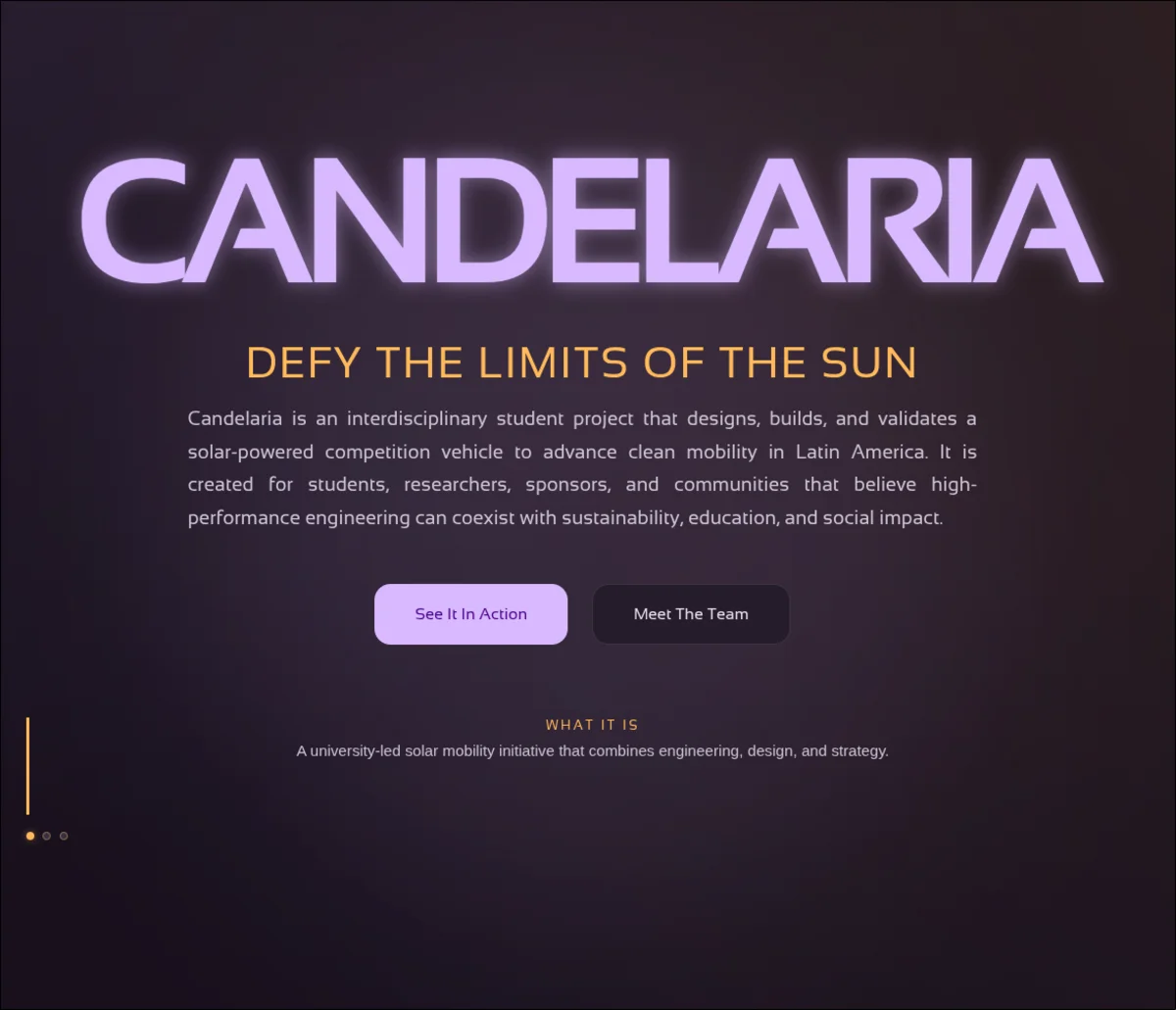
Design leader and sole developer of the full digital system for a university solar vehicle research team.
- Role
- Design Lead · Product Engineering · Full-stack
- Timeline & Status
- Oct 2025 – Present · In development
- Tools
- React · Django · Tailwind · Figma · Python · Claude · Git · Vscode
01 Problem
A team's digital home, not a portfolio
Candelaria is the complete digital presence of a university engineering competition team. The site goes beyond a static portfolio: it integrates member management, publications, memberships, donations, a merchandise shop and a gamification system for followers, all under a kinetic, high-contrast visual identity.
The project was born out of the need to centralize the team's communications, make external support easy, and offer a user experience that matches the team's technical level. From database architecture to color palette, every decision was made with product and engineering criteria.
Design lead. Solo developer.
Candelaria is an interdisciplinary research seedbed focused on developing a solar-powered vehicle, combining technological innovation, sustainability and design applied to mobility.
I also designed and built the entire website solo: architecture, backend, frontend, integrations and deployment. My hybrid profile across design, UX/UI and frontend lets me act as a bridge between technical decisions and the way they are communicated, understood and experienced by different stakeholders.
Beyond a PDF and a donations link
University competition teams usually settle for partial solutions: an Instagram account, a PDF with their achievements, and a generic donations link. Candelaria needed something different.
- A platform that reflects the team's technical and visual identity.
- A system that lets external supporters back the team financially with real traceability.
- An internal panel where leaders can manage members, publications and roles without touching code.
- Support for two payment markets: international (Stripe) and Colombia (PayU).
- A long-term incentive to keep followers involved: gamification.
02 Process
Development process
- 01
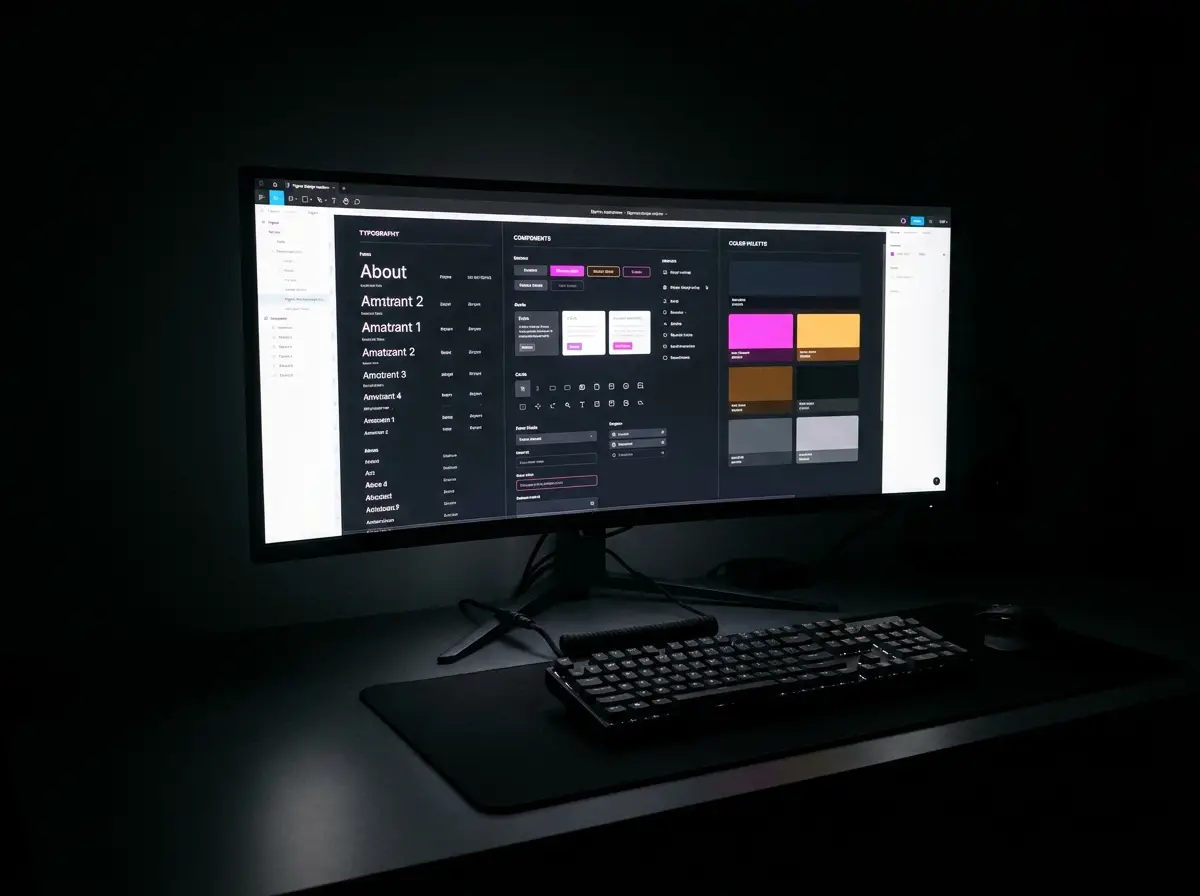
Research & Design System
'Neon Velocity' design system in Figma: typography, palette, components and 6 screens with mobile-first cinematic scroll.
- Defined the 'Neon Velocity' design system in Figma.
- Designed 6 final screens with a mobile-first, cinematic-scrolling approach.
- Built the design system in Tailwind CSS 4 and Class Variance Authority (CVA).
- Component variants and layout rhythm across all main views.
- 02
Architecture & Backend
PostgreSQL data model with Django 4.2 + DRF: 13+ models, dual JWT auth for internal and external users, Supabase for gamification.
- 13+ model schema in PostgreSQL with Django 4.2 and DRF.
- Dual auth: internal team users and external followers via JWT.
- Secure whitelist for leadership role assignment with manual approval and audit logging.
- Supabase integration for profile sync, media storage and PL/pgSQL gamification.
- 03
Frontend & Integrations
React 19 SPA with Vite 7, full i18n (ES/EN) and dual-provider checkout — Stripe and PayU — verified via HMAC-SHA256.
- SPA in React 19 with React Router DOM 7 and Vite 7.
- Full Spanish/English localization with i18next.
- Cart and checkout flow with Stripe (international) and PayU (Colombia).
- HMAC-SHA256 webhook verification and real-time follower tier calculation.
- 04
Performance & Deployment
ORM query optimization (select_related, prefetch_related), vite-plugin-imagemin compression and monolithic Vercel deployment.
- Query optimization with select_related(), prefetch_related() and .only().
- Image compression with vite-plugin-imagemin.
- Media served via Supabase Storage.
- Monolithic deployment on Vercel: frontend at /, backend at /api/*.
03 Decisions
What's inside the platform
Auth & user management
Dual profile system: internal users (team members) with whitelist and leadership roles, and external users (followers and buyers). Full registration, login, password recovery and profile management.
E-commerce & payments
Merchandise shop (hoodie, cap, bottle), 3-tier memberships ($5 / $10 / $25 USD), open donations in COP/USD. Persistent cart, checkout with Stripe (international) and PayU (Colombia), per-user purchase history.
Gamification — follower tiers
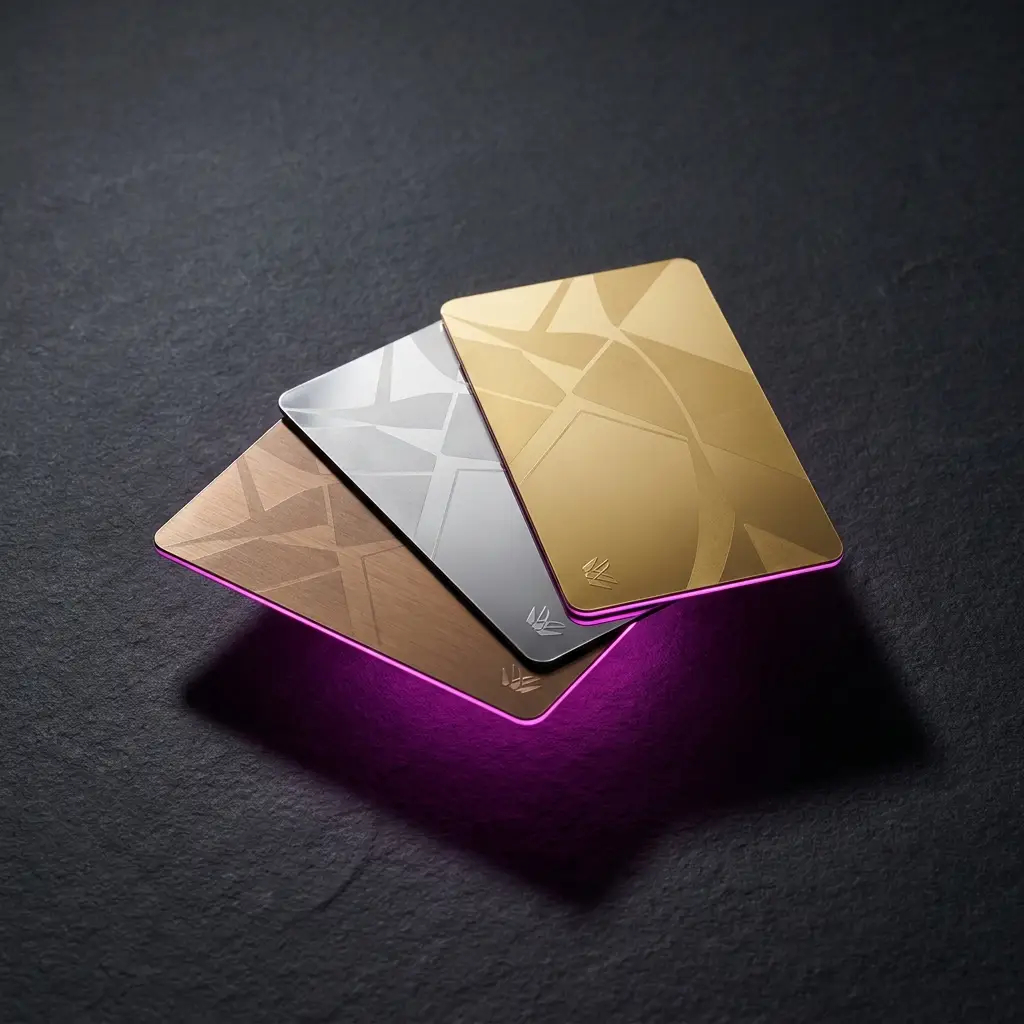
Score = total donated (COP) + months of membership × 5,000 COP. Computed in PL/pgSQL on Supabase and exposed via REST API.
Internal panel
Members-only panel: member management, role assignment, publication of articles with PDFs, leader whitelist administration and transaction review.
Multilingual support
Full Spanish and English support via i18next. All backend models store fields in both languages (_en / _es) and the API responds based on the language parameter.
Score model
| Tier | Minimum score |
|---|---|
| Visitor | 0 |
| Supporter | 1+ COP |
| Bronze | 20.000 COP |
| Silver | 60.000 COP |
| Gold | 150.000 COP |
| Core | 300.000 COP |
Performance results
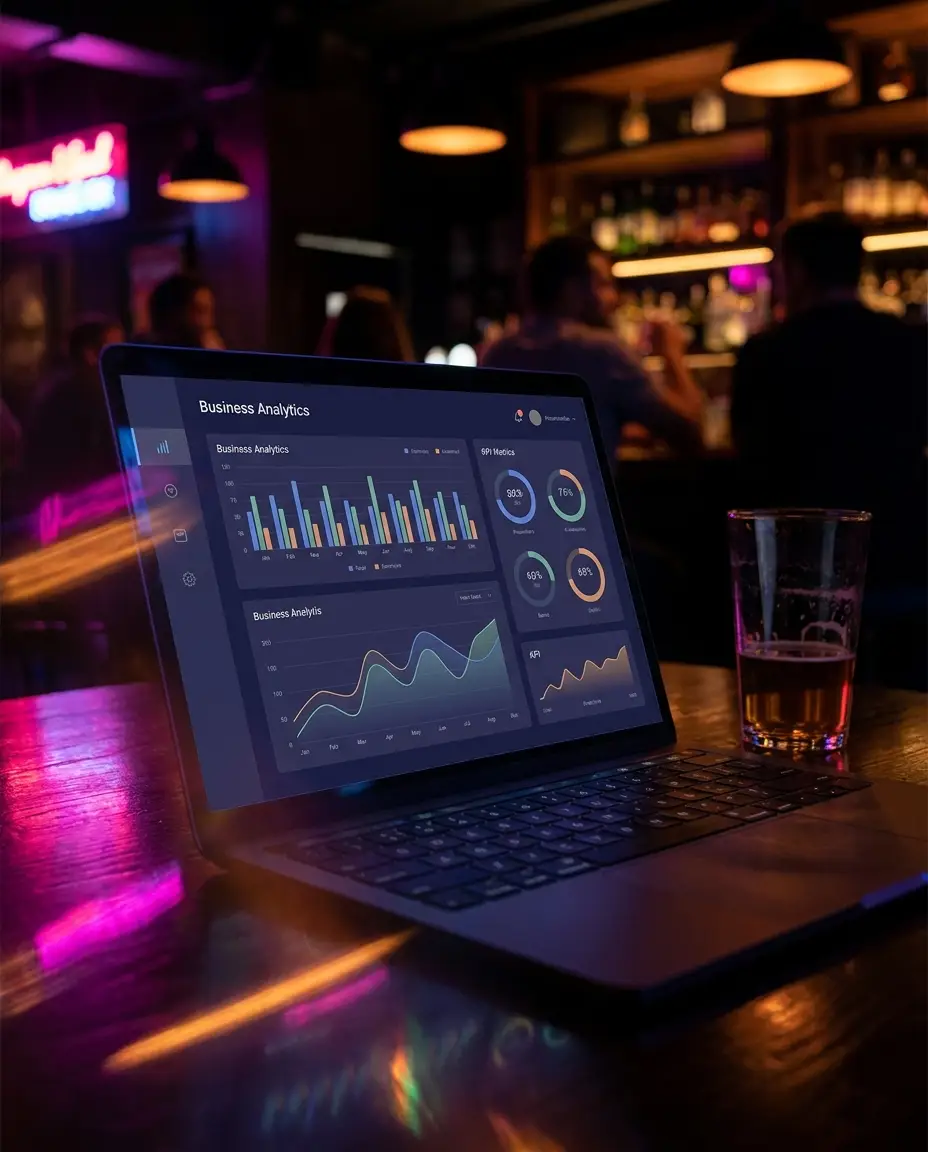
| Metric | Before | After | Improvement |
|---|---|---|---|
| Publications list load | 2.5 s | 0.8 s | 68% faster |
| Team page load | 1.8 s | 0.5 s | 72% faster |
| Members API queries | 50 | 8 | 84% fewer queries |
| Publications API queries | 40 | 10 | 75% fewer queries |
Security posture
- bcrypt hashing (12 rounds).
- Rate limiting on auth endpoints (10 req/min) and brute-force protection (8 attempts / 15 min).
- Webhook verification with HMAC-SHA256 and 5-minute timestamp tolerance.
- Idempotent payment processing to prevent double counting.
- Audit logging for every admin action.
- Security middleware: CSRF, configured CORS, security headers.
04 Result
What I learned
Candelaria is the project that forced me to think like a product engineer, not just a developer. Architectural decisions about when to use Django vs Supabase, how to model the tier system, and how to abstract two payment providers required reasoning about real trade-offs, not just shipping features.
The biggest lesson was designing for two completely different audiences: an external follower who wants to support with one click, and a team leader who needs to manage people and publish content. Building a single platform that serves both without either feeling the interface wasn't made for them was the most interesting design challenge of the project.
Carrying both the design leadership and the technical development simultaneously revealed a clear advantage: when you set the brand rules and implement them in code, every inconsistency surfaces immediately. The cost is that you carry every inconsistency alone.
Next case